

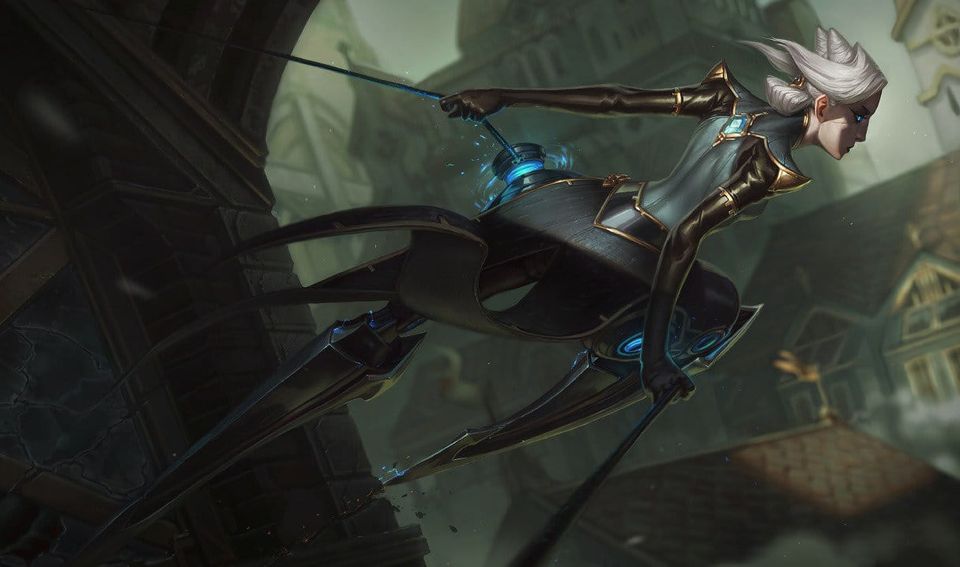
I am suffering the joy and shame of being a late-life League Of Legends player
It's never too late to play a game
I am writing here today with a confession: I have become a regular League Of Legends player in 2026. The worst part? I think the game has been pretty fun.
It started roughly a year ago. Two of my brothers have played League Of Legends since 2011, but I never joined them. I was too busy emulating JRPGs on my computer and making cute photo sets of Link from The Legend of Zelda to publish on my Tumblr. They mostly stopped playing as adults, but occasionally would view VODs of esports tournaments when we were all together. One Thanksgiving, we were crammed into a tiny apartment, so I sat down with them and watched.
I didn't know what I was looking at. All I could see were health bars and little figurine-like characters from a bird's-eye view. Sometimes, I saw flashes of light, and it almost seemed like characters instantly disappeared from the screen. Watching League Of Legends felt like trying to read a book in a language I didn't understand. I peppered my little brother with questions, like "Where did that guy go?" and "What are they trying to do right now?" At one point, he turned to me and said, "You know, the best way to understand is to just play." We set up a gaming laptop on the dining room table and sat side-by-side. I heard a rippling spring pool as my character spawned into the Summoner’s Rift, and I haven’t left its jungles since.
Playing now lets me engage with League Of Legends on my own terms
Being a League Of Legends beginner in 2026 has its challenges. There are over 170 Champions to play. This is a very high number. It also feels more burdensome than, say, learning 150 Pokémon, because understanding each Champion requires more contextual knowledge. Some characters scale and are better in the late game, whereas others can get a lead by being aggressive in the early game. There are some Champions that can play multiple roles, but then you need to build them with different items (and you need to know those items). The beauty and horror of learning League Of Legends is that every time you feel like you learn one aspect of the game, you realise you need to learn five more things.
None of this is all that surprising given Riot Games released League Of Legends over 15 years ago and has been adding to it ever since. The amount of information to learn is a great reason not to play the game! However, I have also found that being late to it is probably one of the best things that could have happened to me. In fact, I’d argue that being late brings its own joys, and allowed me to experience the game on my own terms.
This post is for paying subscribers only
Already have an account? Sign in.
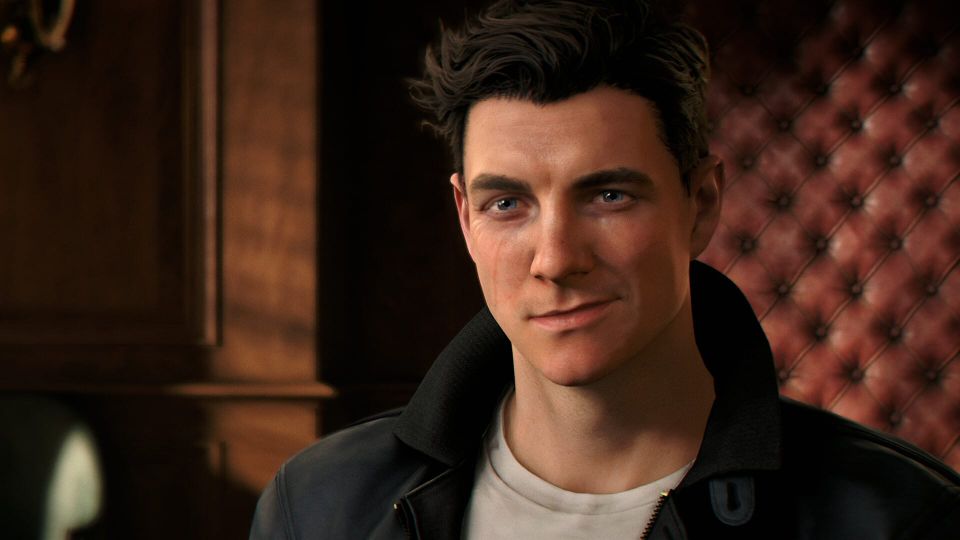
How asset streaming is - and isn't - enabling new ideas for game design
Beyond the loading screen
It may seem like damning with faint praise to say that the best part of 007: First Light was its tutorial, but the training montage of IO Interactive's Bond simulator was arguably the standout sequence in a game that wasn't short of spectacular moments. The level's rapid-fire cuts between driving, shooting and sneaking within MI6's Maltese training facility managed to be instructive, thrilling and novel in the same moment, proving in five electric minutes that IO had the cinematic eye to handle 007.
But the sequence also shone a spotlight on one of recent history's more significant technologies: asset streaming. The last half decade has brought this method of data streaming to the fore, as the proliferation of solid state drives (SSDs) dramatically reduced loading times and facilitated rapid world and level changes. Alongside First Light's training montage, asset streaming has been held responsible for other snazzy sequences, particularly on PlayStation 5 where an SSD and "instant loading" were heavily touted features, such as the rapid portal transitions seen in Insomniac's Spider-Man 2 and Ratchet & Clank: Rift Apart.
Yet while asset streaming may be the technological poster child of this console generation, the technology - and data streaming in general - has long played a central role in how games are made. At the same time, there's more to these flashy set-pieces than fast loading times. Understanding why is important at a time when the relationship between creativity and technology is being scrutinised more intensely than ever.
But first, and at the risk of sounding like a primetime BBC documentary presenter, what is asset streaming? In layman's terms, it's where games load digital resources from your storage drive into memory as and when they are needed. "There's a game world, and there could be hundreds of different entities that take up the world, and those entities are assembled via different pieces of information," says Autumn Willow, senior game designer at Supermassive Games. "To render it in the software, the GPU needs to store in memory the addresses of all these different things … this where you get the idea of RAM. You can only remember so much, and modern game engines have ways to mitigate that, but at the end of the day, there is a hard limit."
"New technology, it's really only worth what it can do to enable creativity"
Asset streaming essentially ensures that your PC only needs to hold in memory the relevant data for that particular moment of whatever game you're playing. It's the reason open world games can present players with such vast landscapes without their computer melting. A game like Elder Scrolls V only needs to load a specific chunk of Skyrim at any given moment, rather than the entire world.
But asset streaming is also an umbrella term for numerous technologies that have developed gradually through game development history, all of which revolve around shunting different types of data from storage into memory. One of the earliest examples relevant to games is texture streaming, which essentially does what asset streaming does, but for high-resolution textures rather than entire objects.
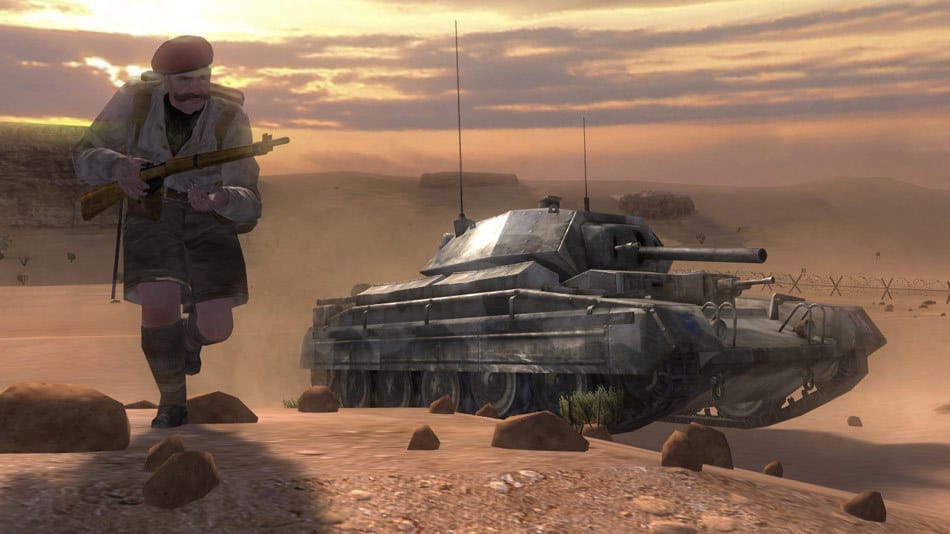
"Texture streaming is a technique that effectively increases the available console memory by not keeping textures (the color map, normal map, and specular map) in memory when they are not currently needed." says Robert Field, who was an engineering lead at Infinity Ward from 2003 to 2009. "As long as a lower-resolution version of a texture remains in memory as a backup, the worst-case scenario for an unexpected need for that texture is just a temporary blurry image." You've probably played a game where entering a new area presented you with soupy, low resolution textures, before the high resolution versions popped into place.
This post is for paying subscribers only
Already have an account? Sign in.
The Lie-In
Links worth clicking about Link
Good morning, videogames. Nintendo's Ocarina Of Time remake has been released, after weeks, months, possibly an eternity of wide-angle lens discussions about whether remakes are healthy endeavours within an artistic ecosystem or craven, corrosive money-grabs designed to numb the proletariat with Class-A nostalgia. I find this discussion both reductive and tedious, and now the game is out some people want to continue having it. No! No!! I am putting my fingers in my ears and la-la-la-ing and instead reading articles about the actual videogame Ocarina Of Time. Join me.
Christian Donlan reviewed the remake for Eurogamer, getting at the larger resonance of The Game As Cultural Object while also illuminating what's great about the experience of playing it.
It is my bright delight today to be able to tell you that, around thirty years later, having just revisited the game in Nintendo's new remake, Ocarina of Time is still worth telling people about. It's still an adventure so surprising, so satisfying, so moving that I need to talk about it.
Nintendo regularly run interviews with their own developers. These are obviously a form of marketing, but they often contain real
Jank Mail: Let's scroll
This week in PC gaming
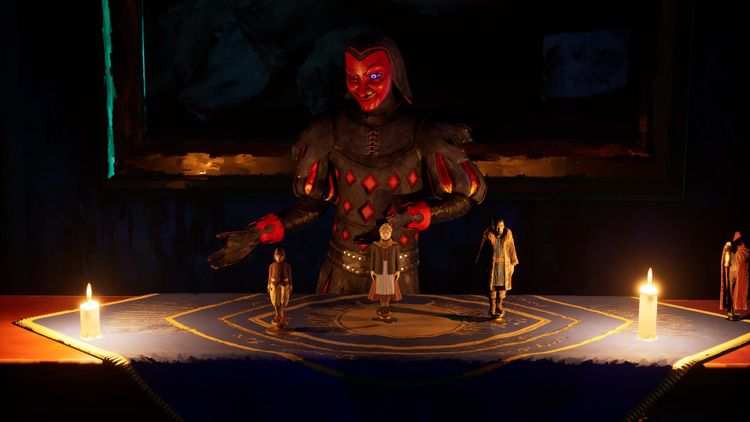
I would like to say that I’m back, but I’m actually away again, as part of what has accidentally turned into the most travel-intensive year of my life. I am doing tne newsletter anyway, in a hotel lobby, to avoid another hurtful APB from Brendy. This week in Jank was a little quieter, but the reviews will continue until morale improves. Marsh was precision-targeted by the period language of The Killing Stone:
This sort of glib summation doesn't do justice to how genuinely sinister and even profound this game actually is. Much of it written in unsparingly period-accurate English that is as playful and dense as the literature of that time, crammed with allusion and double-meanings. I have to admit, as a former medievalist and writer of pseudo-historical early-modern occult fiction, The Killing Stone aims squarely for the bulbous, flashing weak-spot on my exposed arse. I am pathetically bedazzled by the audacity and ambition here, but, exhaustingly clever though this is, I don't think it's simply an exercise in self-regard: the game, appropriately enough, has soul.
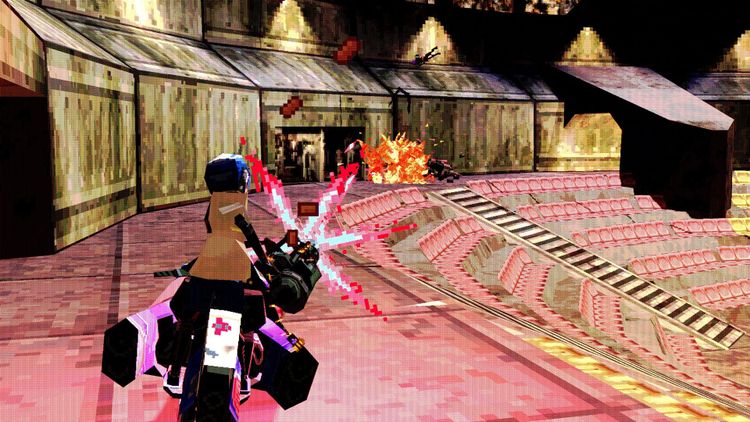
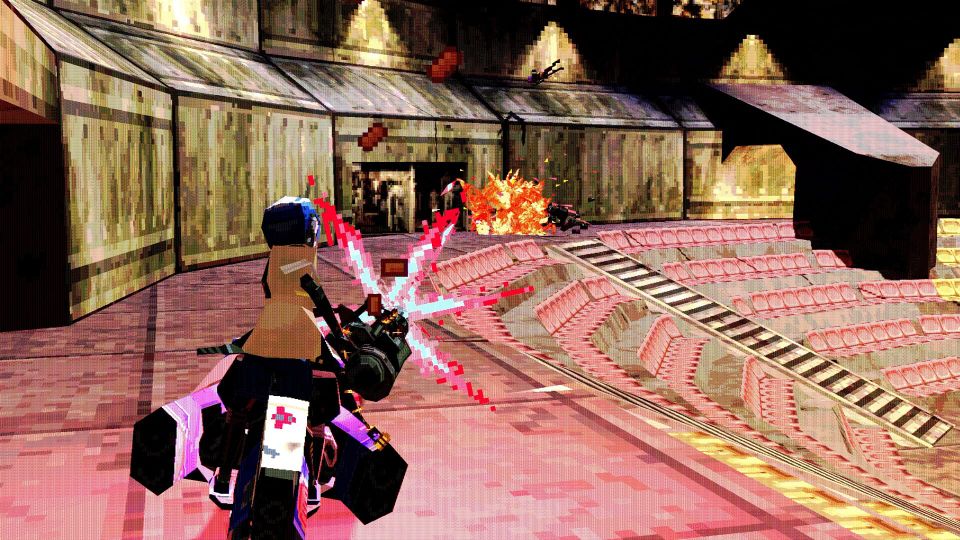
Sin returned to the Abrams Era to commend Slayer Shock
What you could play this weekend
Hoverbikes, shooting stars, plants
I spent all my videogamesing time this week painting the hallway. I've colour drenched the walls and skirting boards a pink colour, which in some moments seems to warm up an otherwise windowless part of the flat, and in other moments gives me the sensation of walking through a Mr. Blobby innertube. I think I like it. Please let me now play videogames again.
But what to play? I've chosen three candidates below. Tell us what you're playing in lieu of troubling interior decorating choices in the comments.
Loftia
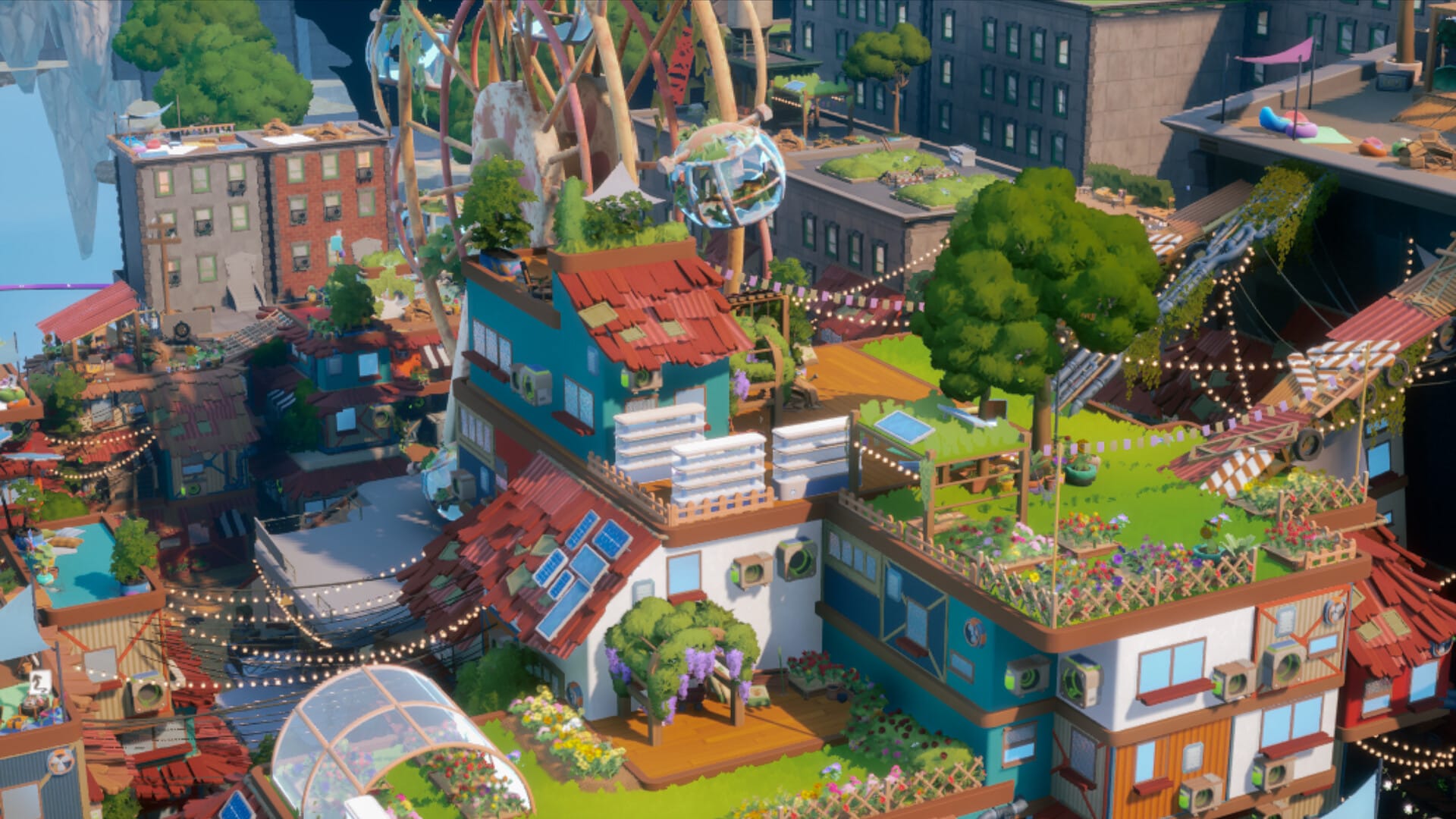
All the typical crop-tending, home-decorating, and pet-wrangling of yer cosy buildy crafty Stardewy 'em ups, but here nailed to an MMO, with community building projects and next-door players to bring down the house prices by hanging a sign about farts in their front garden. There's no space in my life for a game like this, but I like the ramshackle, islands-in-the-sky, verdant art style.
Faraway
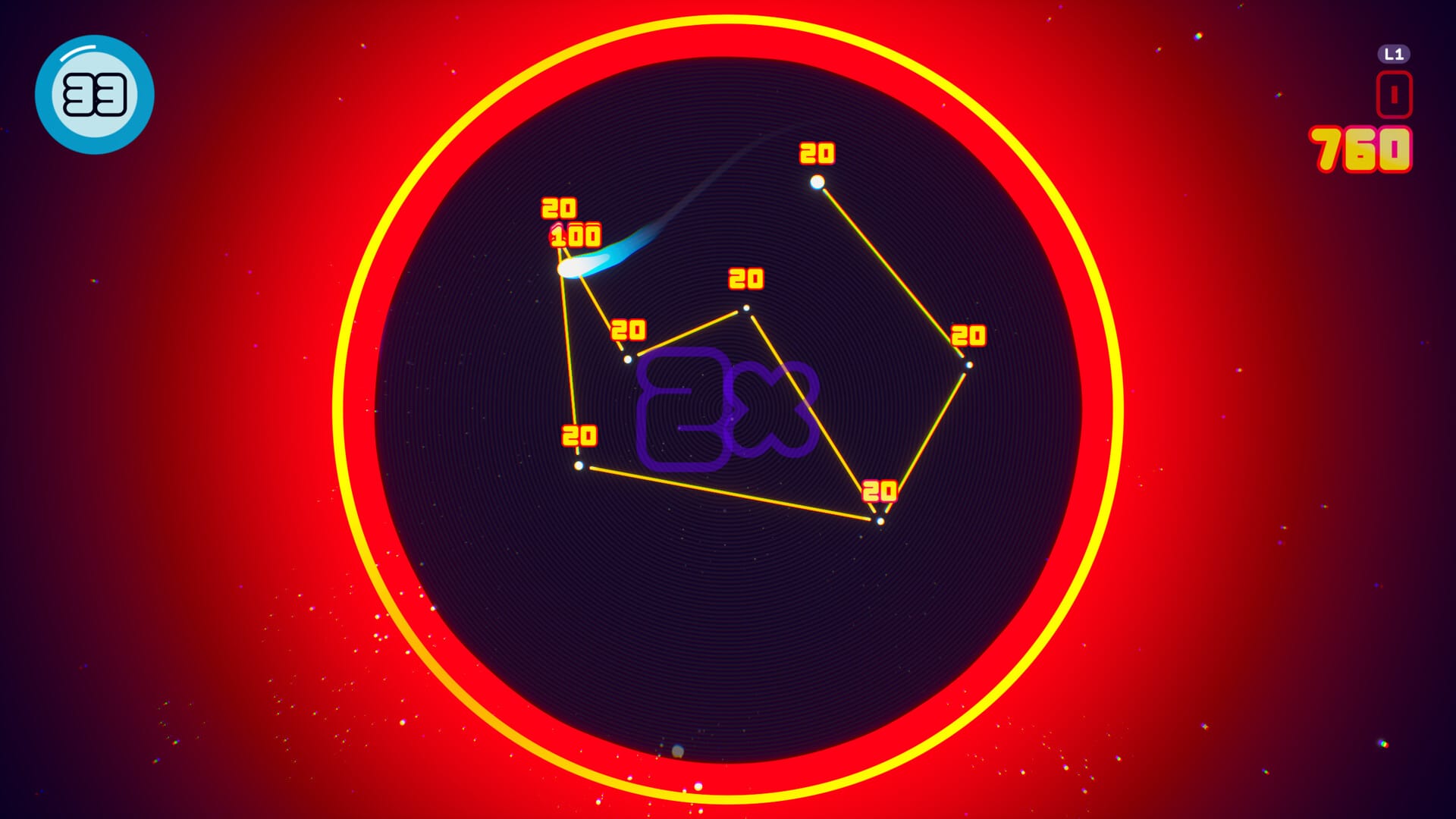
An arcade game about steering a shooting star around the gravitational pull of celestial objects to form constellations and score points. Faraway claims to be a genuine solo project, having been developed by Steph Thirion
Text Adventure: World of Warcraft: Rise of the Horde by Christie Golden
"I wouldn't want to see him at Orc Nuremberg"
Total Playtime is the official Jank podcast, and is produced thanks to the support of our paying subscribers (and formerly our backers on Patreon). This week's episode is exclusive to that exalted throng: you may join them by subscribing here, which will grant access to every episode so far.
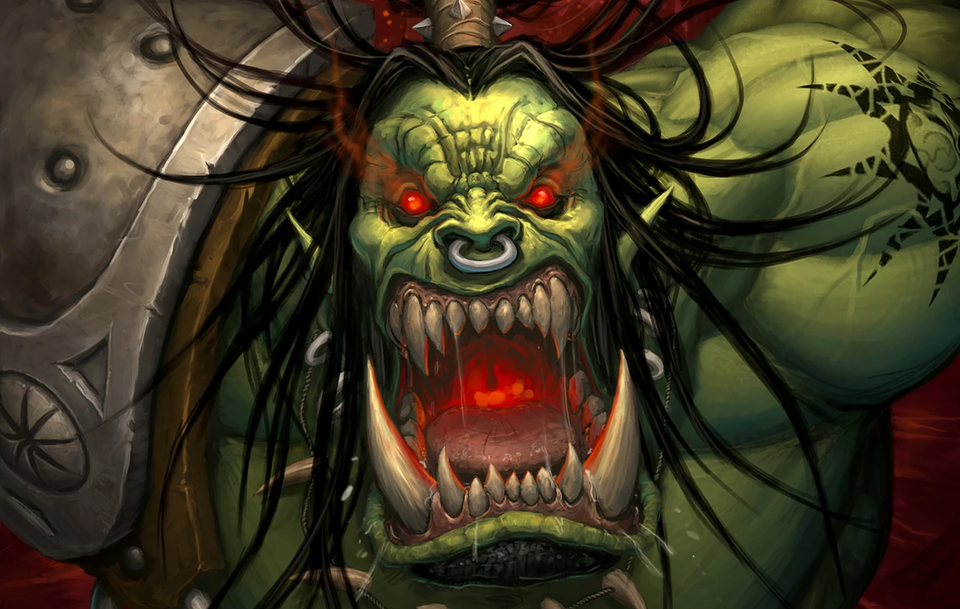
It is time for another episode of Text Adventure, our videogame book club, which this week saw Alice, Brendy and myself joined by Alice's previously-foreshadowed friend Tim to judge Rise of the Horde, which answers the question nobody was asking about why the orcs showed up on Azeroth to kill everybody.
In keeping with this season's attempt to focus on halfway readable books it actually arrives with a decent pedigree: Christie Golden has written dozens of books in original and licenced universes, penned the the 2000 novel that first introduced Warcraft regular Thrall, and wrote this book partially in an effort to earn money from her debilitating WoW habit. It nevertheless suffers from two significant and related problems: it has to fit into an existing game narrative, and that game narrative is that the orcs committed unprovoked genocide.
This post is for paying subscribers only
Already have an account? Sign in.
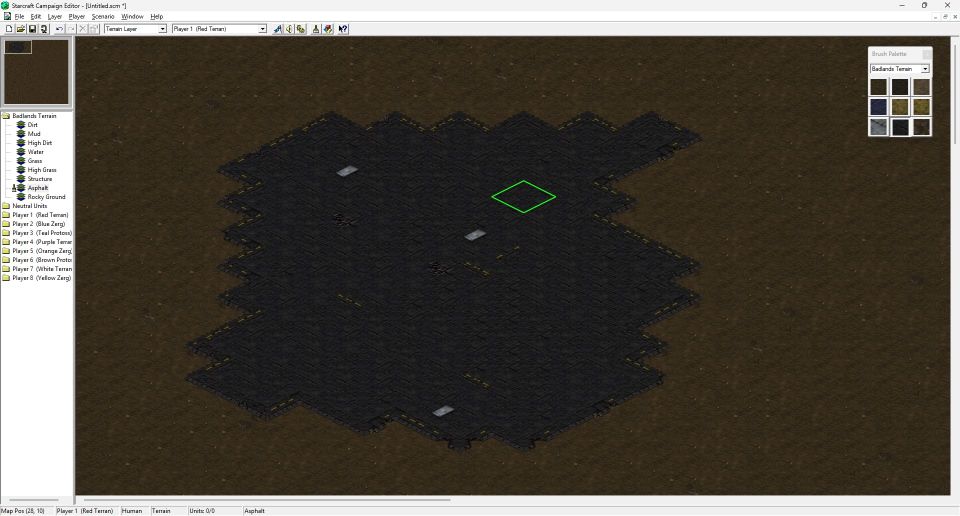
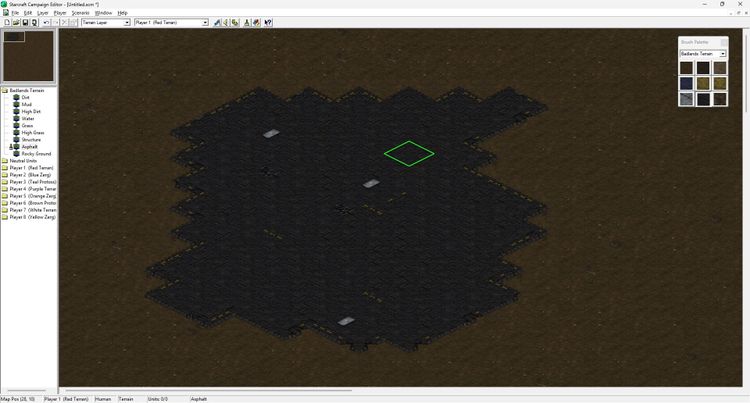
The map (editor) is not the territory, but it felt like it
Random asphalt memory crisis
StarCraft's map editor taught me the word 'asphalt' - a word I don't recall ever having real cause to use and yet have intensely strong memories of learning; as a synonym, a sort of flavourful synonym, probably partly because of the innate musicality of it which may even mostly have derived from its novelty. I laugh now to myself because music is so painfully subjective that I fear I cannot convey what I feel if you do not (like a writer might, ha). But don't you feel it? AS-PHALT. It feels like a long inward breath preceding a plummet to me, physically undeniable, but I digress.
I digress because the real strength of the word is probably just that I learned it from StarCraft, which made it better than a normal word - it made it a StarCraft word. You know how it works, I think. You're small and sponge-brained and you learn most words either in context from stories you're too young to appreciate as actual constructions of language, far too pulled along by the machinery of the story, the way Aslan bleeds into his fur, the way Arthur Dent loses his lunch in

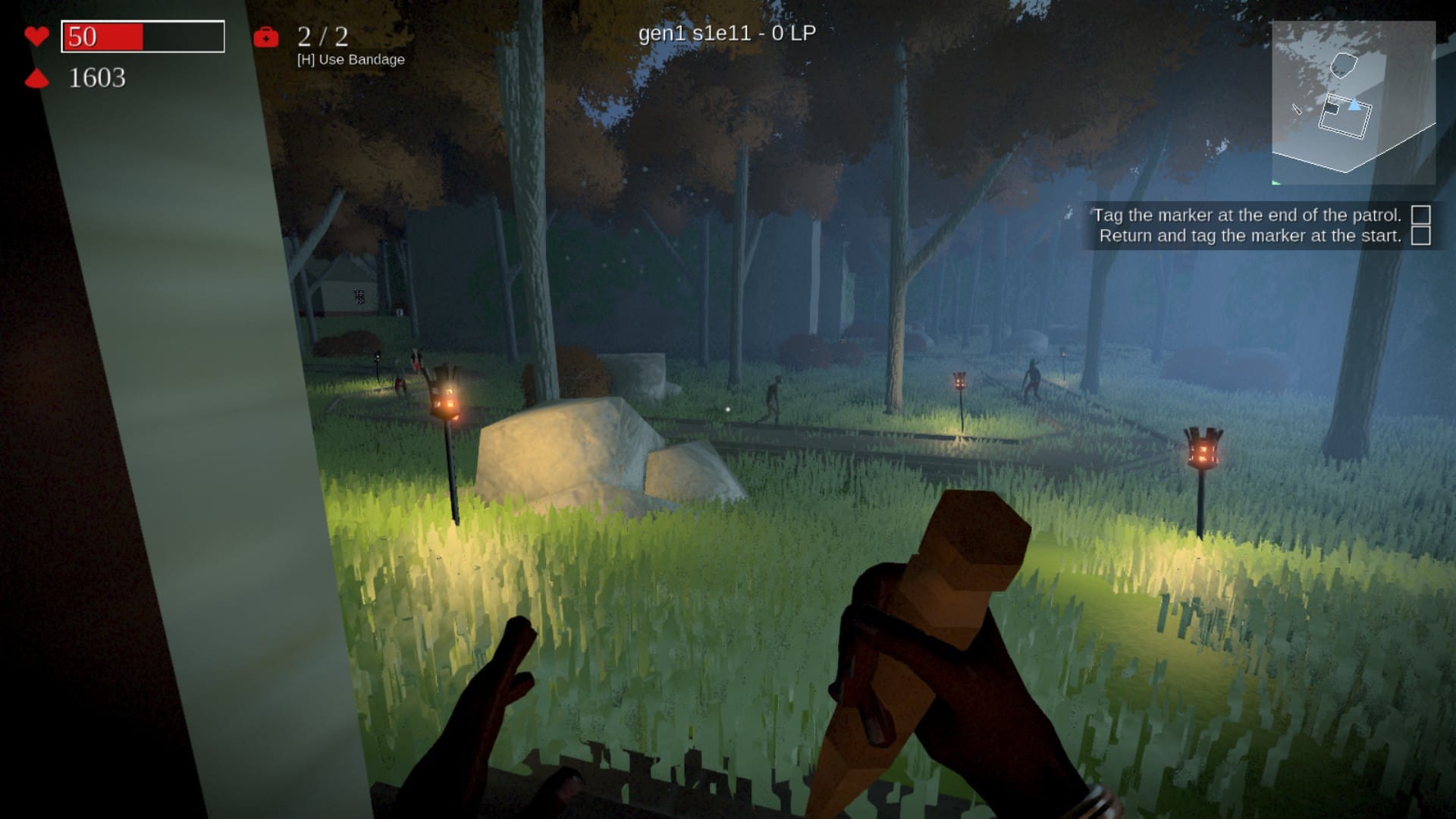
Slayer Shock's rough simplicity makes it oddly timeless
Boom and dust
A likely recurring element of this column is studying what has changed in games and (hiss, spit) the games "industry" over this 300-year-long decade. But going back to those games you meant to cover, meant to revisit, or never quite played, often prompts thoughts about the currents of other culture, too. Since Slayer Shock's budget love letter to Buffy the Vampire Slayer was released in 2016, that show's creator has been vaguely taken to account (insofar as they ever are) for being, among other things, "a dick". Buffy's gleefully silly and queer "monster hunting friends" descendant Wynonna Earp has been and gone. Twilight's sparkly misogynist nadir, already passing, is practically Old People culture even as Ann Rice vampires make a welcome comeback.
And yet, instead of an uncomfortably outmoded Game Of The Show, Slayer Shock endures, by asking a simple question: What if a vampire jumped out and went BLEAAARGH?
🚀
You're reading Sin's column about the games of yesteryear. Not old enough to be retro, not shiny enough to be new. This is the hinterland of PC gaming. And the first of our subscriber goals!
This post is for paying subscribers only
Already have an account? Sign in.
The homepage is over but you can signup for more
You like more, right?